Strategic buyer vs. private equity buyer: What software founders should know

How different ownership models can shape your business, your people and what comes next.
Selling a software company often brings founders into conversations with two broad categories of buyer: strategic acquirers and private equity firms.
A strategic buyer generally acquires a company because of how it fits with a broader commercial strategy. A private equity firm acquires a company as an investment and typically works toward a future liquidity event.
There is also a third model worth understanding: permanent ownership, where businesses are acquired without a predetermined resale timeline.
For founders, the important question isn't which model is universally better. It's which ownership model aligns with what you want for the business, your people, your customers and your own future.
Omegro operates within that third category, providing a permanent home for specialist Enterprise Asset Management software businesses.
Strategic buyer vs. private equity: what’s the difference?
The main difference is why the buyer wants to own the business.
A strategic buyer is typically an operating company acquiring another business to support a wider commercial strategy. For a software company, that could mean entering a new market, adding technology or products, gaining specialist expertise or expanding its customer base.
A private equity buyer acquires a company as an investment. Its objective is generally to increase the value of the business during its ownership and ultimately realize a return through a future transaction.
Permanent software acquirers provide a third option, acquiring businesses without a predetermined intention to sell them again.
The right fit depends on what the founder wants for ownership, management, employees, independence and future growth.
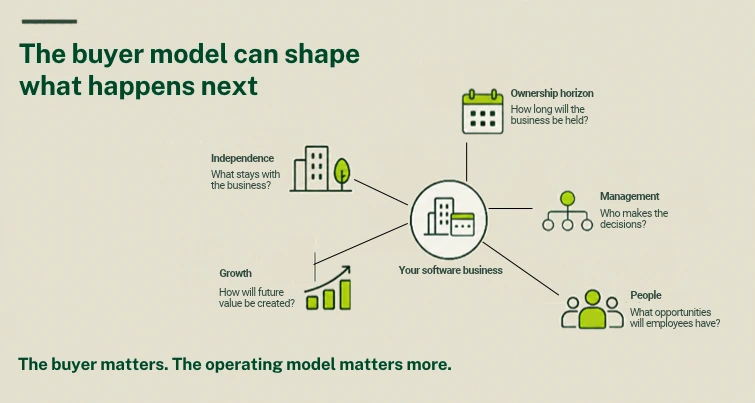
What should software founders compare when choosing a buyer?
1. How long will they own your business?
Private equity generally invests with a future liquidity event in mind. The timing and form can vary, but another ownership event will usually form part of the investment model.
A strategic buyer may not have the same requirement to sell. However, strategic ownership does not automatically mean permanent ownership. Corporate priorities can change, and acquired businesses may later be sold.
2. What happens to your employees?
For many founders, selling the business also means deciding who will become responsible for the people who helped build it.
A strategic buyer may combine teams or functions as part of an integration. Under private equity ownership, existing teams may remain in place, although roles and priorities can change as the business pursues its investment plan.
Under permanent ownership, there is no resale, so decisions about people can be considered over a longer horizon, giving teams greater continuity and room to grow.
Look beyond assurances that employees will be supported. Ask what happened after previous acquisitions:
- Were teams retained?
- Were leaders developed internally?
- What new opportunities became available?
- Where were functions consolidated?
- What happened if the founder stepped away?
For founders who see a sale as part of their legacy, the future of their employees can be as important as the financial outcome.
3. What happens to management and decision-making?

Ownership and day-to-day management are not the same thing.
A strategic buyer may integrate products, technology, teams or customer functions where it sees strategic value. A private equity buyer may keep the company operationally separate while introducing governance around its investment plan.
Founders should establish what independence actually means in practice:
- Who controls the product roadmap?
- Who decides where to invest?
- Which decisions remain with existing management?
- Will the brand remain?
- Who owns customer strategy?
- How will management capability continue to develop?
These questions are particularly important in vertical software, where management teams often hold years of specialist market knowledge and customer relationships.
The question is not simply whether management stays. It is what authority, accountability and opportunities management will have under the new owner.
4. What support comes with the new owner?
Independence and access to wider expertise can work together.
Different buyers bring different capabilities.
Private equity firms may provide capital, board expertise, recruitment support and M&A capability. Strategic buyers may provide industry expertise, technology, infrastructure, operational experience and access to wider commercial networks.
For founders, a useful question to ask is:
What becomes possible under this owner that would have been harder to achieve alone?
The answer might include leadership development, stronger sales and marketing capability, product investment, security expertise, acquisition support, enterprise infrastructure or access to peers facing similar challenges.
For founders who value autonomy, the right balance may be an ownership model that keeps accountability close to the business while adding capabilities that support long-term growth.
Where does permanent ownership fit?
The strategic buyer versus private equity comparison can overlook a third option: permanent ownership.
A permanent software acquirer acquires businesses without a predetermined intention to sell them again.
This changes the ownership equation.
Without a scheduled future exit, decisions about management, people, products, customers and investment can be considered over a longer ownership horizon.
Omegro follows this model for Enterprise Asset Management software businesses across Asset Management, Equipment Rental, Facilities Management, Fleet Management and Marine.
Omegro businesses retain their independence and leadership while drawing on the Omegro Operating System, deep EAM expertise, proven frameworks, enterprise capabilities and a global peer network designed to support long-term growth.
For founders, permanent ownership adds another question to the traditional strategic-versus-private-equity comparison: do I want another future ownership event, or a long-term home for the business?
Which ownership model is right for your software company?
There is no single right answer.
Private equity may appeal to a founder who wants to continue growing the company, retain an equity interest and potentially participate financially in a future transaction.
A strategic buyer may create significant opportunities where products, customers, technology or market capabilities complement one another.
Permanent ownership may be more relevant where priorities include continuity, independent leadership, long-term ownership and preserving specialist market focus.
Before comparing offers, decide what matters most to you:
- Do you want the company to have a permanent owner?
- What future do you want for your employees?
- How important is maintaining the company's identity and independence?
- Do you want to remain involved after the sale?
- What support does the business need from its next owner?
- How important is specialist knowledge of your market?
- How do you want future growth to be created?
Once those priorities are clear, potential buyers become easier to evaluate.
And don't rely only on what buyers tell you during the sale process. Ask to speak with founders and CEOs from businesses they have previously acquired. Their experience can tell you a great deal about how that owner behaves after close.
Frequently asked questions
Is a strategic buyer better than private equity?
Not necessarily. The right buyer depends on what the founder wants for ownership horizon, management, employees, independence, future growth and personal involvement. Compare the buyer’s actual operating model rather than relying on the category alone.
Will private equity sell my company again?
Private equity investments are generally made with an eventual liquidity event in mind, although timing and exit route can vary. Ask about the buyer’s investment horizon, expected holding period and likely exit options.
What happens to management after a software company is acquired?
It depends on the buyer's operating model. Management may continue leading the business, operate within a new governance structure, broaden its responsibilities or change as integration progresses. Clarify decision rights, expectations and development opportunities before close.
What is a permanent software acquirer?
A permanent software acquirer buys businesses without a predetermined resale timeline. This enables management, people, customers, products and investment to be considered over a longer ownership horizon.
What should I ask before choosing a software buyer?
Ask about ownership horizon, management decision rights, employees, brand and culture, growth strategy, investment priorities, post-close support and the buyer's record with previous acquisitions.
Choosing an owner, not just a buyer
Strategic buyers and private equity firms can both create strong outcomes for software founders. What differs is why they acquire, how they operate and what that ownership could mean over time.
That's why choosing a buyer should involve more than comparing valuations. Before deciding, be clear about what you want for the business, management team, employees, customers and your own future involvement. Then test each buyer against those priorities using evidence from businesses and leaders they have previously acquired.
For founders of Enterprise Asset Management software companies who want a permanent home for what they have built, Omegro offers another path: long-term ownership, independent leadership and specialist operational support without a planned future sale.
Learn more about the different types of software acquirers and how to choose the right home for your business.