Software acquirers explained: How to choose the right buyer for your software business

Software acquirers explained: How to choose the right buyer for your software business
Selling a software business is not simply about finding someone willing to buy it. It’s about deciding who should own it next.
Two buyers may arrive at similar valuations while having very different plans for the business after the transaction.
Will the brand remain?
What happens to the management team?
Will the business continue to operate independently?
Will the next owner invest for long-term growth?
And could the business be sold again?
For founders, understanding those differences is an important part of evaluating an offer beyond price.
What is a software acquirer?
Software businesses can be acquired by several types of buyers, including:
- strategic or corporate acquirers;
- private equity and other financial buyers;
- private equity-backed software platforms;
- vertical market software groups; and
- long-term or permanent acquirers
The important distinction isn't simply who will buy the business. It's why they want to own it, how they expect it to operate afterwards and what they ultimately intend to do with it.
Those differences can shape the future of the brand, management team, employees, customers, products and growth strategy.
What are the different types of software buyers?
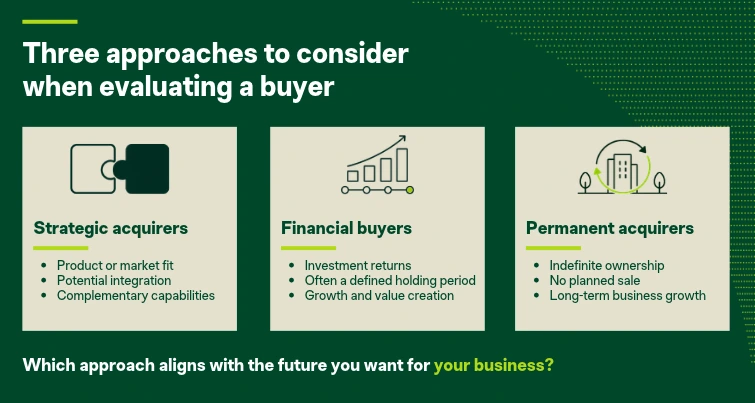
There is no single acquisition model that is right for every software company or every founder. Understanding the most common buyer types gives founders a framework for asking better questions.
Strategic acquirers
Strategic acquirers typically buy businesses that complement an existing product, customer base, technology capability or market position.
That fit can create significant opportunities. Founders should understand how the buyer expects the acquired business to operate afterward.
Ask:
- Will our product remain independent?
- Will the brand continue?
- What happens to the management team?
- Which part of the business, if any, will be integrated?
Private equity and financial buyers
Financial buyers generally acquire businesses as investments, with the aim of increasing value over a defined ownership period before ultimately generating a return for investors.
That can bring capital, expertise and additional resources to a growing software business.
For founders, the important questions are how that value will be created and over what timeframe.
Ask:
- What is the expected holding period?
- Is another sale anticipated?
- Will growth be driven primarily through business expansion, operational efficiencies or a combination of both?
- What investment is planned for people, products, customers and market opportunities?
- What level of autonomy will the existing management team retain?
Long-term and permanent software acquirers
A permanent acquirer approaches ownership differently. Rather than acquiring with a predetermined resale timeline, the intention is to own and grow the business for the long term.
Instead of preparing the business for the next exit, the focus can remain on strengthening management capability, products, customer value and market opportunities over time.
For founders thinking about succession or legacy, however, “permanent” shouldn't be enough on its own.
Ask what permanent ownership actually means in practice:
- Will the business remain autonomous?
- What happens to its management team?
- How will people continue to develop?
- What expertise and resources become available?
- How will growth be supported?
- Has the acquirer ever sold a business?
Omegro acquires EAM software businesses with the intention of owning and growing them indefinitely, while businesses remain autonomous and gain access to the Omegro Operating System, specialist expertise and a global network.
How should founders compare software acquirers?
Valuation provides one way to compare offers. It does not tell you what your company may look like several years after the transaction.
Before entering an acquisition process, founders should decide which outcomes matter most to them and then evaluate potential buyers against those priorities.
1. Ownership horizon
Start with one of the simplest questions:
How long does the buyer intend to own the company?
Some acquisition models are built around an eventual exit. Others are designed around indefinite ownership.
Neither model automatically makes a buyer the right or wrong choice. What matters is alignment.
A founder who wants to maximize value and make a complete exit may have different priorities from someone looking for a long-term successor capable of protecting the company's legacy.
Understanding the ownership horizon also tells you whether your company could go through another sale process in the future.
2. Brand independence
If you have spent years building a recognizable brand, find out what the acquirer intends to do with it.
Will the company continue operating under its existing name? Will products retain their identity? Or will they eventually be absorbed into another brand?
There can be legitimate reasons for either approach. The important thing is knowing the plan before the transaction rather than discovering it afterward.
3. Management control and autonomy

Ownership and day-to-day management are not the same thing.
Founders should understand how decisions will be made following an acquisition.
Ask potential buyers:
- Who controls strategy after the transaction?
- Who makes hiring decisions?
- Who controls product investment?
- How are budgets established?
- How involved is the parent company in daily operations?
- Which decisions remain with local management?
This becomes particularly important in vertical software, where management teams often possess years of specialized knowledge about the customers and industries they serve.
4. Operational support
Autonomy and access to wider expertise can work together.
A strong acquirer can provide capabilities that would be difficult for an independent software company to build alone, including leadership development, operating expertise, peer networks and access to broader enterprise resources.
The question founders should ask is not simply:
"How much independence will we retain?"
It’s:
"Where will we continue to lead independently, and where can your expertise and capabilities add value?"
That distinction can reveal a great deal about an acquirer's operating philosophy.
5. Industry expertise
For a specialized software business, relevant domain expertise matters.
A company providing fleet management, equipment rental, facilities management, marine or asset management software may support highly specialized workflows developed over many years.
A buyer that understands those environments can start with a stronger appreciation of the customers, operating context and opportunities that shape the business.
For founders of vertical software businesses, consider asking:
- What companies have you previously acquired in our market?
- Who within your organization understands our industry?
- What expertise can we access after acquisition?
- How have similar businesses developed under your ownership?
6. Growth approach
Buyers can have very different approaches to creating value after acquisition.
Ask where future growth is expected to come from.
Will the owner continue investing in:
- management and leadership capability;
- people;
- product development;
- customer value;
- operational capability; and
- new market opportunities?
Operational efficiency matters in any well-run business. But founders should understand whether the buyer's plan is primarily about short-term cost reduction or about building the capabilities required for sustainable growth.
At Omegro, the focus is on long-term growth: developing management and people, strengthening products and customer value, and pursuing market opportunities while preserving the foundations that made the business successful.
What does ownership look like after the sale?
Due diligence and negotiations may take months. Ownership can last for years or decades.
That makes the post-acquisition operating model worth scrutinizing as closely as the transaction itself.
At Omegro, businesses retain their independence while gaining access to the Omegro Operating System, deep EAM expertise, proven frameworks, enterprise capabilities and a global peer network.
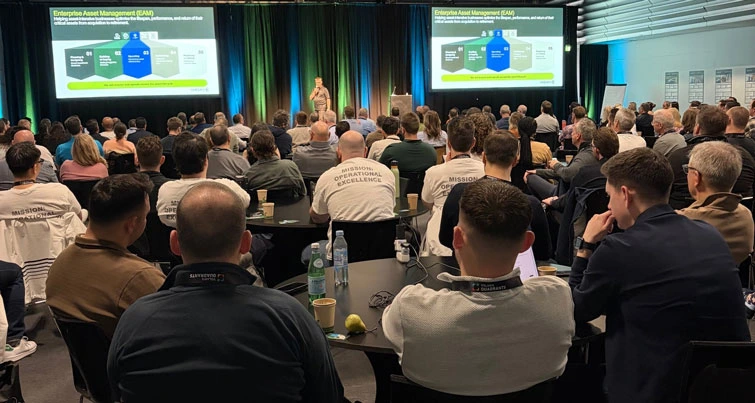
The principle is straightforward: preserve what already works, strengthen management and capability, and support long-term business growth.
Why domain expertise matters in vertical software
Vertical software businesses are built around specific customer problems, workflows and markets.
Over time, their products often become deeply embedded in customers' operations. The management team also develops industry relationships and institutional knowledge that cannot simply be recreated by transferring the technology to a new owner.
That makes relevant domain expertise an important part of evaluating a buyer.
Omegro specializes in Enterprise Asset Management software across:
- Asset Management
- Equipment Rental
- Facilities Management
- Fleet Management
- Marine
Questions to ask a software buyer before selling
Founders don't need to wait until due diligence to understand a potential buyer's intentions.
The following questions can help uncover differences between acquirers early in the process:
Ownership
- How long do you intend to own the business?
- Have you sold businesses you’ve acquired?
- How will the acquisition be funded?
Management and autonomy
- Who will lead the business?
- Which decisions remain with management?
- What happens to the brand and culture?
People
- What happens to employees after the acquisition?
- What leadership and career opportunities become available?
- How do you develop future leaders?
Growth
- How do you expect the business to grow?
- What investment will continue across products, people and customers?
- What expertise and capabilities become available?
Track record
- Do you own similar businesses?
- Can I speak to founders or leaders you’ve acquired?
- What do these businesses look like today?
Looking beyond the transaction
The best time to understand a buyer is before you sell.
Valuation matters. So does what comes afterwards.
Who owns the business in ten years?
What happens to the management team and employees?
Will customers continue to receive the specialist support they value?
Will products continue to develop?
And will the business have the expertise, resources and support to keep growing?
There is no single right buyer for every founder. The important thing is understanding what you want for the business, your people and your customers, then asking enough questions to know whether a potential owner is aligned with that future.
Omegro provides a permanent home for EAM software businesses across Asset Management, Equipment Rental, Facilities Management, Fleet Management and Marine, combining long-term ownership with autonomy, deep EAM expertise, the Omegro Operating System and a global peer network.
Considering the future ownership of your software business? See Omegro's acquisition approach or start a confidential conversation with our Corporate Development team.