AI-first, people-led: The future of software growth

AI-first, people led: Why the future of software growth is bigger than technology
Artificial intelligence is reshaping how software businesses operate, innovate, and create value. Yet while the conversation often centres on technology, the organisations achieving the greatest impact are focusing on something else: leadership, culture, and a relentless commitment to solving customer problems.
In this article, we explore why successful AI adoption is about more than implementing new tools. From building an AI-first mindset to using technology as a force multiplier, we explore how software leaders can prepare for an AI-driven future.
Want to learn more? Listen to Episode 4 of The Omegro Effect: EAM Unlocked Podcast.
From AI opportunity to action
Artificial intelligence has quickly become one of the most important conversations in software. New tools appear daily. Productivity gains are being reported across industries. Product roadmaps are changing. Expectations from employees and customers are evolving. For software founders and CEOs, the challenge is no longer deciding whether AI matters. It is deciding how to respond.
The difficulty is that most businesses are trying to navigate this shift in real time. Leaders are being asked to make decisions about technologies that are evolving faster than any previous technology cycle, while continuing to serve customers, develop products, and grow their businesses. The result is that many organizations understand the importance of AI but remain uncertain about how to turn opportunity into action.
The companies that will benefit most from AI are unlikely to be those that simply adopt the latest tools. They will be the ones that build the capabilities, culture, and leadership mindset required to continuously adapt as the technology evolves.
AI is a leadership question
One of the biggest misconceptions surrounding AI is that it is primarily a technology project.
In reality, the most successful AI transformations are business transformations.
Technology alone rarely creates a competitive advantage. Most AI tools are available to everyone. The real differentiator is how organizations integrate those tools into the way they operate, make decisions, develop products, and serve customers.
Being AI-first is less about choosing a platform and more about developing a mindset. It requires leaders and teams to continuously ask where intelligence, automation, and data can improve outcomes. The focus shifts from "Which tool should we use?" to "How can we create more value?"
Organizations that view AI through this lens tend to achieve more meaningful results because they are focused on solving business problems rather than implementing technology for its own sake.
Start with the customer, not the technology
The temptation with any major technology shift is to begin with the technology itself. AI makes that temptation even stronger.
Every week brings new demonstrations, new models, and new promises about what AI can accomplish. Yet many organizations find themselves investing significant time and resources exploring capabilities that have little relevance to their customers.
The strongest AI initiatives start from the opposite direction.
They begin with customer challenges.
Where is friction slowing down workflows? What information is difficult to access? Which processes create delays? What decisions could be made faster or with greater confidence? How can customers achieve better outcomes?
When businesses start with those questions, AI becomes a tool for solving real problems rather than a solution searching for one.
This customer-first approach has an additional benefit. It helps organizations avoid becoming distracted by trends and ensures innovation remains connected to value creation. Customers rarely care which AI model is powering a solution. They care that their problems are being solved more effectively.
AI amplifies what already exists
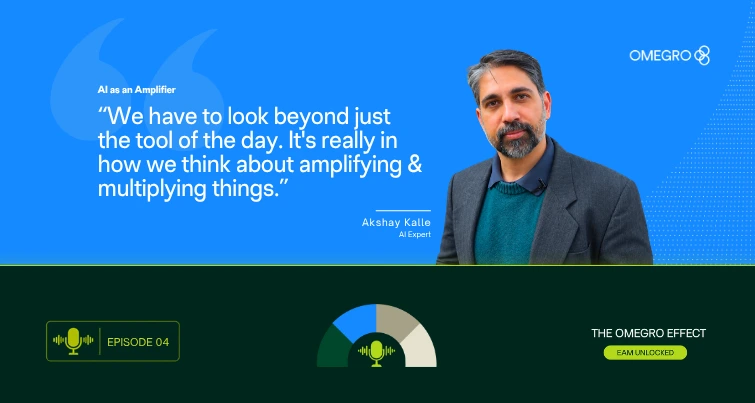
The most important thing AI can do is amplify what already exists.
Businesses with strong products, deep industry expertise, valuable data, and close customer relationships are often best positioned to benefit from AI adoption. The technology accelerates existing strengths and helps teams operate at a scale that was previously difficult to achieve.
The opposite is also true.
AI does not automatically solve weak strategy, poor customer understanding, or ineffective processes. In many cases, it simply exposes them more quickly.
That is why AI should be viewed as a force multiplier rather than a magic solution. When paired with talented people and strong businesses, it creates opportunities for faster innovation, better decision-making, and greater customer value. Without those foundations, the impact is significantly reduced.
Productivity is not the end goal
Much of the conversation around artificial intelligence revolves around efficiency. Teams can automate repetitive work, reduce manual effort, and complete tasks more quickly than before.
While those gains are meaningful, they are only part of the story.
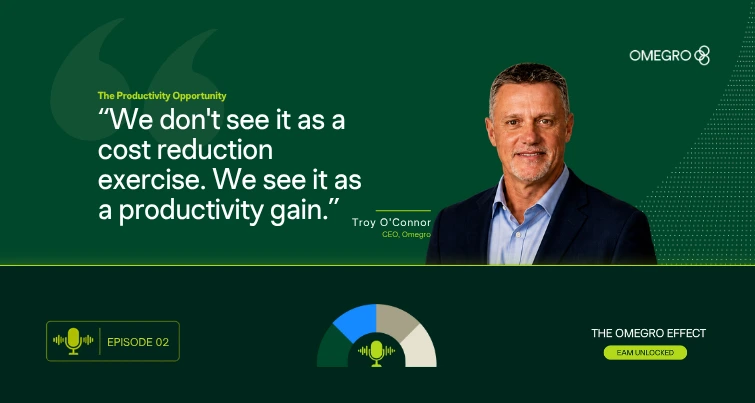
The more important question is what organizations do with the capacity that AI creates.
Businesses that see AI purely as a cost-reduction initiative may achieve short-term efficiencies. Businesses that see AI as a growth enabler have a much bigger opportunity. Time saved can be reinvested into product development, customer engagement, innovation, market expansion, and solving more complex challenges.
The most successful organizations are not asking how many hours AI can eliminate. They are asking how many new opportunities AI can create.
AI has become a scale advantage
Perhaps the biggest challenge for software founders is that AI requires experimentation.
There are new tools to evaluate, new workflows to test, new product opportunities to explore, and new risks to manage. Most independent software companies are attempting to navigate these decisions with limited time, limited resources, and limited opportunities to compare notes with others facing the same challenges.
This is where scale creates an advantage.
When multiple software businesses are experimenting simultaneously, lessons travel faster. Successful use cases can be shared. Mistakes do not need to be repeated. Leaders gain access to expertise, frameworks, and practical examples that would take years to build independently.
For many founders, the challenge is not recognizing that AI matters. The challenge is figuring out what to do next.
An organization operating alone may spend months evaluating technologies, testing ideas, and determining where to invest. An organization that is part of a broader ecosystem can benefit from shared learning across multiple businesses, industries, and teams. It gains access to experiments that have already been run, lessons that have already been learned, and approaches that have already demonstrated results.
As AI continues to evolve, the ability to learn collectively may become one of the most valuable competitive advantages a software business can have.
Why this matters for software founders
Historically, founders evaluated potential acquirers based on valuation, cultural fit, operational expertise, and long-term stewardship. Those factors remain critically important.
But AI introduces a new consideration.
Founders should increasingly be asking prospective buyers a different question:
How will you help my business navigate AI?
The answer matters because AI transformation is not simply about purchasing software. It requires expertise, experimentation, change management, product strategy, talent development, and leadership alignment. Many founders are attempting to solve these challenges while simultaneously running their businesses.
The right long-term partner should help reduce that burden.
They should provide access to proven frameworks, practical experience, shared learning, and specialized expertise. They should help businesses adapt faster while preserving the domain knowledge, customer relationships, and culture that made them successful in the first place.
Increasingly, the value of an acquisition is not just capital. It is capability.
Culture will decide who wins

The biggest obstacle to AI adoption is rarely technical.
It is cultural.
Organizations can purchase identical tools and achieve completely different outcomes. The difference often comes down to whether employees feel empowered to learn, experiment, and adopt new ways of working.
Successful AI transformation requires curiosity, continuous learning, knowledge sharing, and leadership support. People need room to develop new skills and confidence using technologies that are evolving rapidly. Without that foundation, even the most advanced technology struggles to deliver meaningful results.
As one observation puts it:
“AI won't replace you. AI will replace people that don't use AI.”
The lesson is not about fear. It is about adaptability.
The businesses creating the most value tomorrow will be those that encourage people to learn, evolve, and embrace new capabilities today.
The future is AI-first, people led
AI will undoubtedly change how work gets done. It will influence how products are built, how customers are served, and how businesses operate. But technology alone will not determine which organizations succeed.
The winners will be the businesses that successfully combine AI capabilities with deep customer understanding, strong leadership, industry expertise, and a culture of continuous improvement.
They will use AI to accelerate innovation, improve decision-making, strengthen customer relationships, and unlock new opportunities for growth. Most importantly, they will recognize that technology is only a multiplier. The real source of competitive advantage remains the same as it has always been: talented people solving meaningful problems for customers.
The future may be AI-first, but it will still be people-led.
About Omegro
Omegro provides a permanent home for Enterprise Asset Management (EAM) software businesses that support the world's most critical assets. Powered by our deep sector expertise, enhanced 5‑Stage Asset Lifecycle Framework and the Omegro Operating System, we accelerate the transformation of independent businesses into global category champions.
Contact us to learn more.