Unlocking enterprise value across the asset lifecycle

May 19, 2026
The Asset Lifecycle. Five stages. One connected system. Better outcomes over decades.
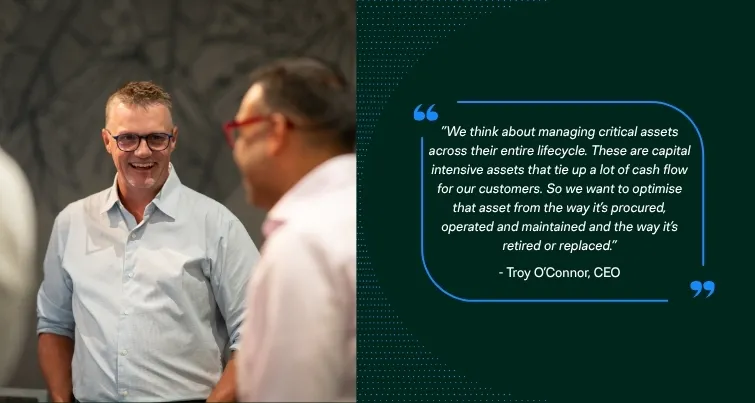
Managing critical assets isn't just capital intensive, it's decision intensive. Most organisations don’t lose value in operations; they lose it much earlier when lifecycle decisions are made in isolation.
Planning, designing, building or buying, operating, maintaining, replacing, retiring; each phase is optimised in isolation. The result? Cost surprises, avoidable downtime, and short-term fixes that harden into long-term constraints.
A lifecycle-first approach changes how value is created. Not in one stage but across the system.
Why lifecycle alignment matters
When lifecycle stages are disconnected, teams optimise in silos, and the cost simply shifts elsewhere. Early decisions compound over time, shaping outcomes for years, sometimes decades. That’s why lifecycle alignment isn’t just a process improvement, it’s a lever for performance.
The 5‑Stage Asset Lifecycle: where value is created (and where it’s lost)
%20(1).webp)
Omegro’s Asset Lifecycle approach is intentionally practical: five stages, connected end‑to‑end. Each stage creates value, with the real gains coming from how decisions carry through the lifecycle.
Stage 1 - Planning and designing: where lifecycle outcomes are decided
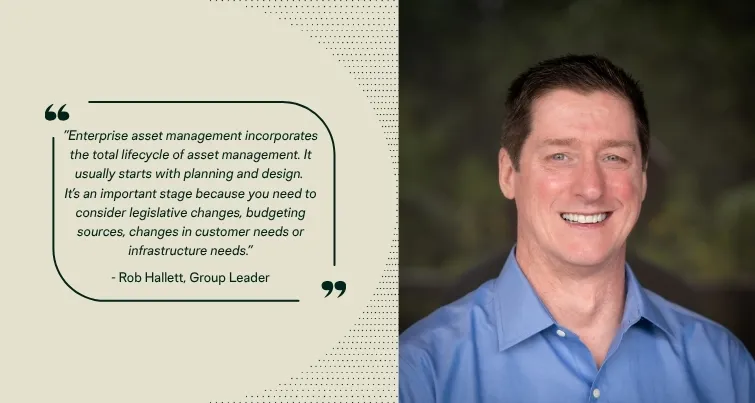
Most lifecycle issues don’t start in operations; they start at the planning and design stage, where the direction is set - the cost, performance, and how the asset will be managed over time. This stage sets the baseline, defining compliance, cost, and long-term performance that operations and maintenance will live with for decades. The impact of these decisions endures for the life of the asset.
Practical signals you’re doing Stage 1 well:
- Assumptions are explicit and testable and not buried in spreadsheets.
- Planning reflects legislative change, funding realities, and evolving customer/infrastructure needs.
- Operations and maintenance are involved early, before decisions are locked in.
Stage 2 - Building or Buying: getting it right the first time
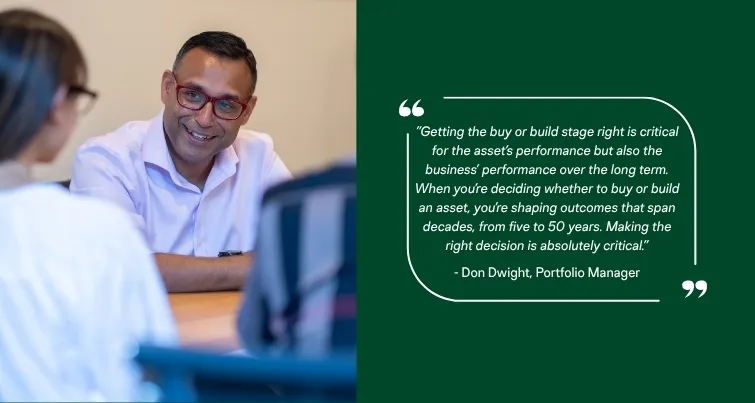
Buy or build decisions don’t just affect cost, they define how the asset performs over time. Get this stage wrong, and complexity carries through the asset’s lifecycle. Most lifecycle problems don’t start in maintenance; they’re created here.
What you can do in Stage 2:
- Treat buy/build as a long‑term outcomes decision.
- Design for how the asset will be operated and maintained, not just built.
- Align decisions with how the asset will be operated, maintained, and ultimately replaced or retired.
Stage 3 - Operating: the stage for maximising asset effectiveness
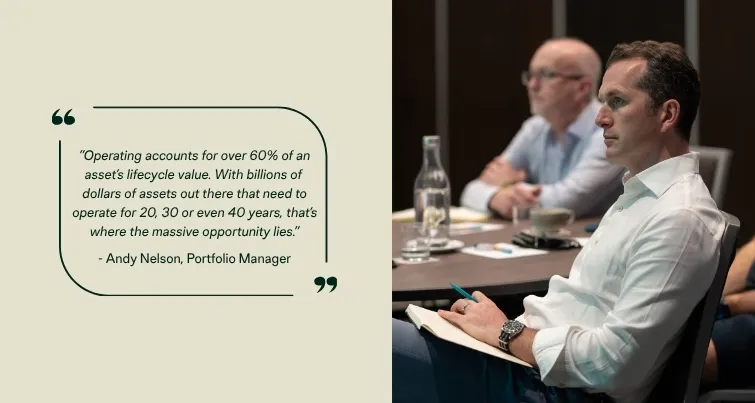
Operating is where enterprise value is realised through cost, performance, and uptime. Small inefficiencies compound over time, increasing costs and reducing reliability.
What strong operating does:
- Use performance insights to identify where value is lost, not just where failures occur.
- Make operating decisions that reflect how the asset will be maintained and eventually retired or replaced.
- Prioritise improvements that lift long‑term effectiveness, not just short‑term output.
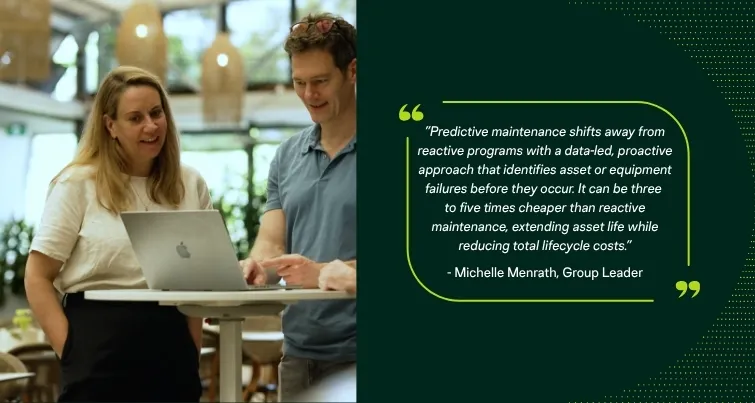
Stage 4 - Maintaining: predictive excellence through data
Maintenance is where asset performance breaks down through cost increases, downtime, and unpredictability. The shift isn’t about reacting faster. It’s reducing failures before they happen. Reactive maintenance responds to breakdowns. Predictive maintenance prevents them. This is how asset life is extended and total lifecycle cost is reduced. The goal isn’t a faster response. It’s fewer failures in the first place.
What predictive maintenance delivers:
- Start with the assets where unplanned failure is most costly or high risk.
- Use insights to intervene earlier, before failure becomes a major disruption.
- Measure success through reduced failures and lower lifecycle cost, not just activity or workload.
Stage 5 – Replacing or Retiring: maximising residual value
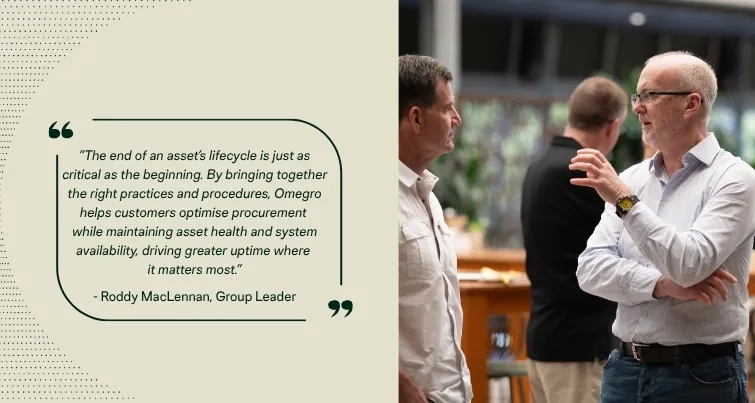
End-of-life decisions don’t sit on their own. Leave them too late, and replacement becomes a forced decision. When they’re planned early, performance, availability, and residual value are protected.
What effective Stage 5 decisions look like:
- Plan for replacement and retirement from the start, not at the end.
- Close the loop between initial decisions and performance - what worked, what didn’t, and why.
- Make end‑of‑life decisions that protect uptime and system availability.
What to do next: five moves that connect the Asset Lifecycle
Lifecycle value improves when you focus on the system, not just individual functions or stages of the lifecycle. These five moves help connect the stages and improve predictability across the lifecycle:
- Make ownership clear: assign accountability for each stage.
- Align success measures: reward predictability, long‑term performance, and system availability.
- Make buy/build repeatable: create clear criteria and make it consistent.
- Prioritise predictive where it matters: start where failure is costly, then scale.
- Plan end‑of‑life early so ‘later’ doesn’t become urgent.
For EAM software leaders: from transactional to strategic value
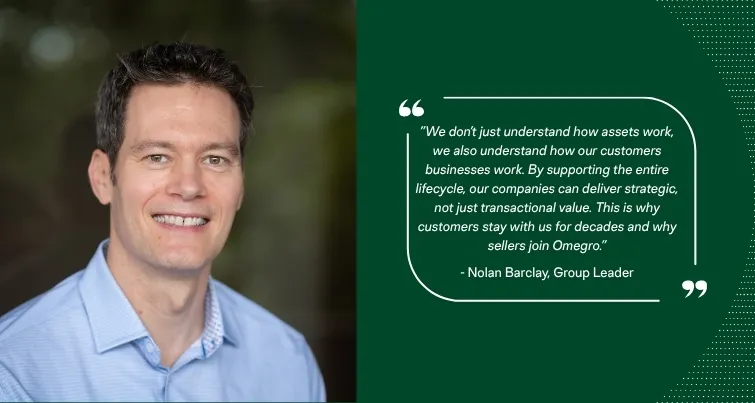
A lifecycle‑first approach changes the conversation. The opportunity isn’t just delivering capability in one stage, it’s helping customers connect decisions end-to-end, so value compounds over time.
Why Omegro
Omegro is the definitive leader in Enterprise Asset Management (EAM). Our businesses don’t work in silos. We connect decisions across each stage of the Asset Lifecycle to improve performance over time:
- Plan and design for smarter investments.
- Build or buy right the first time.
- Operate for predictable performance.
- Maintain with predictive intelligence.
- Replace or retire to unlock residual value.
Watch how we bring the Asset Lifecycle to life, through our global network of EAM experts. That’s what a permanent home looks like: long-term ownership and deep expertise across each stage of the Asset Lifecycle.
Powered by the 5‑stage Asset Lifecycle Framework and the Omegro Operating System, we combine proven playbooks, a global network, and an AI-first, people-led approach to drive sustainable growth.
Follow Omegro for practical, asset lifecycle-led EAM insights. Explore more at omegro.com or contact us to learn how we can help your company grow and start building lasting value.